
DFI Lan Party UT X58 T3eH8 - Motherboard Review
- DFI Lan Party UT X58 T3eH8 - Motherboard Review
- Page 2 - Packaging, Content and Overview
- Page 3 - Closer Look, Connectivity, BIOS
- Page 4 - Testing methodology
- Page 5 - Performance: SATA, eSATA and USB 2.0
- Page 6 - Performance: Cinebench 10
- Page 7 - Performance: WPrime, SuperPI
- Page 8 - Performance: Memory (Everest Ultimate 4.60)
- Page 9 - Performance: Memory (SiSoft Sandra Lite XII.SP2c)
- Page 10 - Performance: image processing
- Page 11 - Performance: WinRAR
- Page 12 – Overclocking, Conclusion
Page 12 – Overclocking, Conclusion
Page 12 – Overclocking & Conclusion
Overclock
As we already mentioned, the motherboard's DIOS has numerous settings and a not very small part of them concerns overclock. We already know what the X58 is capable of and gladly can say that DFI Lan Party UT X58 T3eH8 delivers it too. With the Core i7920 we achieved the enviable 3.84GHz, ut unfortunately we could not test at this frequency, because of a very simple reason – we already wre pushing the processor to its limits ais it ran at 100C, and we also knew what exactly it is capable of, so we decided to spare us a dead processor.
Conclusion
The Good
- Very good design
- Very attractive and well performing cooling
- High quality
- High performance
- Very good BIOS
- Big overclock potential
- Good built in audio
- Two gigabite controllers
- LED indication and buttons on the board
The Bad
- No eSata connectors
- Few extension slots
- High price (320 EUR)
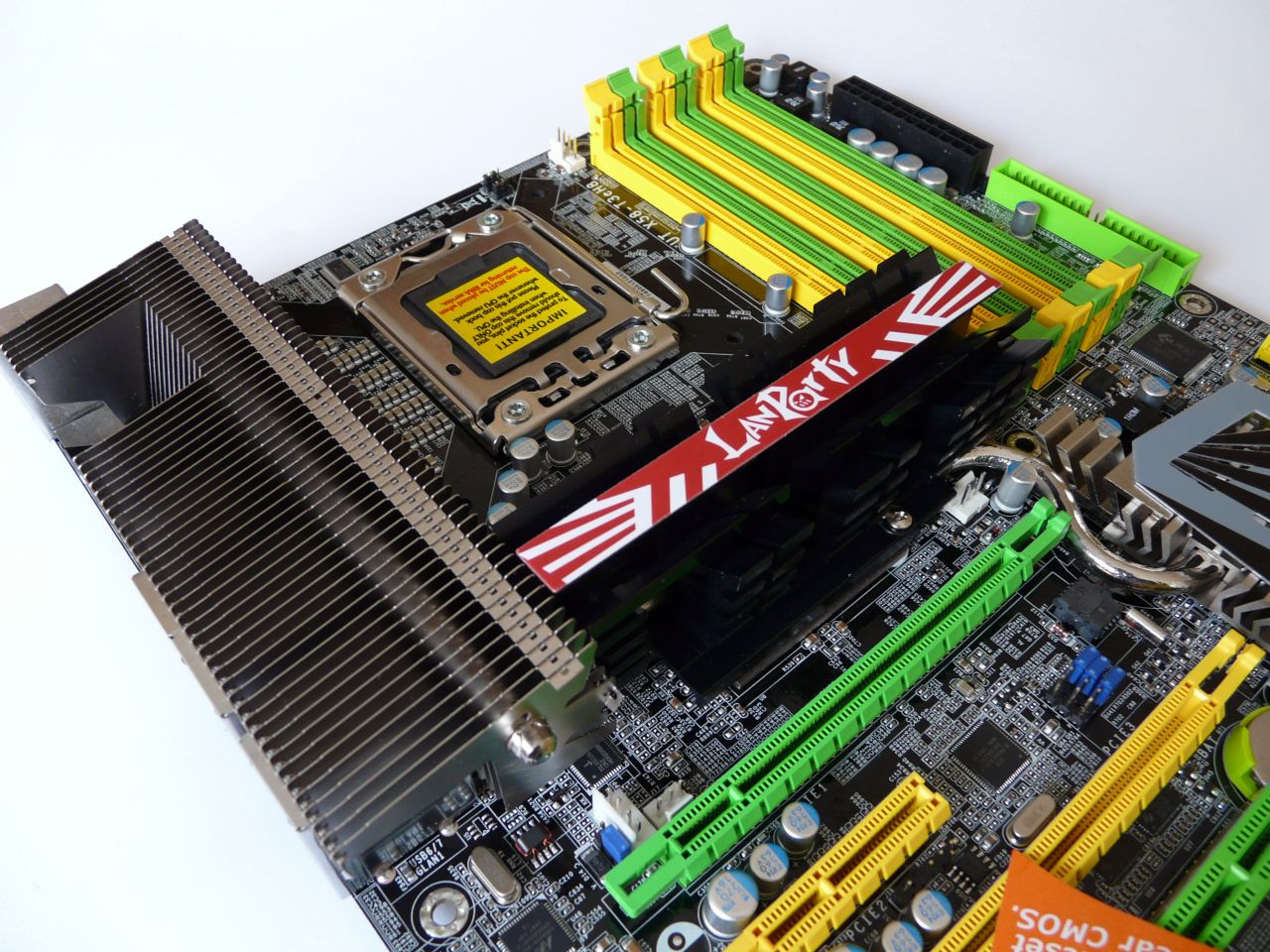
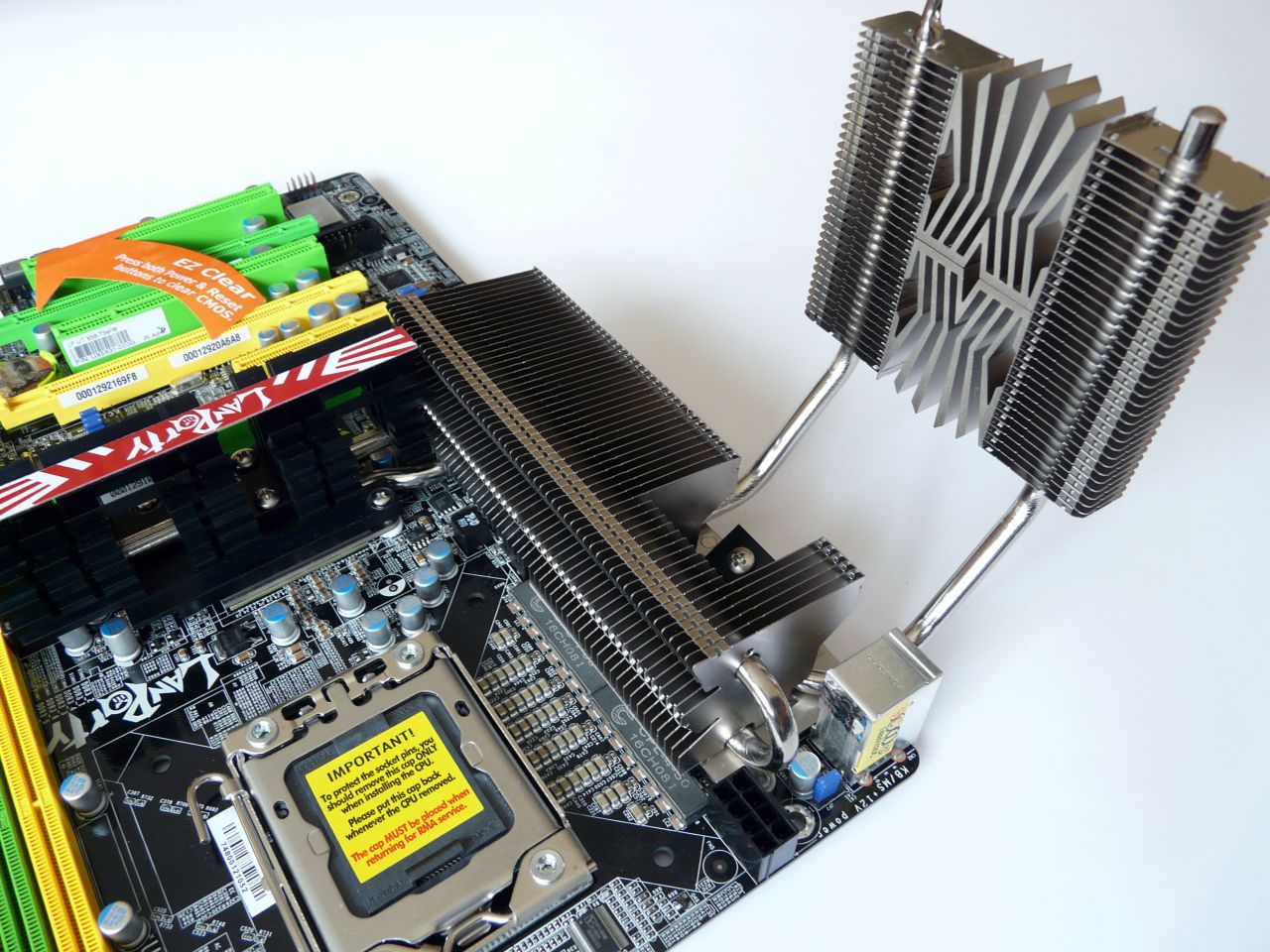
DFI Lan Party UT X58 T3eH8 truly is a very high class product – high quality, very good overclock, outstanding looks, unique cooling of the components – on the whole if you are a hardware enthusiast and love to display the components in your machine – definitely this is the product for you. If you also like UV lighting, there is no reason to think twice. From the shortcoming in reality the only one real is the price – it truly is very expensive, but generally speaking we are accustomed to such prices for the Lan Party family.


We thank our friend at Solytron , who made this review possible.
Author: Stoyan Pamukchiev, a.k.a Stuyo
Comments and discussion in our forum HERE .