
Thermal compounds roundup for 2008
Page 2 - The contestants
Page 2 - The contestants
Revoltec Thermal Freeze

Characteristics:
- Appearance – Gray
- Thermal Conductivity - 4 W/m °K
- Temperature range -50°C ~150°C
- Specific Gravity - 2.5 gr.
- Capacity - 6 gr.
REVOLTEC THERMAL FREEZE comes well encased in transparent plastic. The paste itself is in glass vial. The compound characteristics are written in Both English and German on the back.
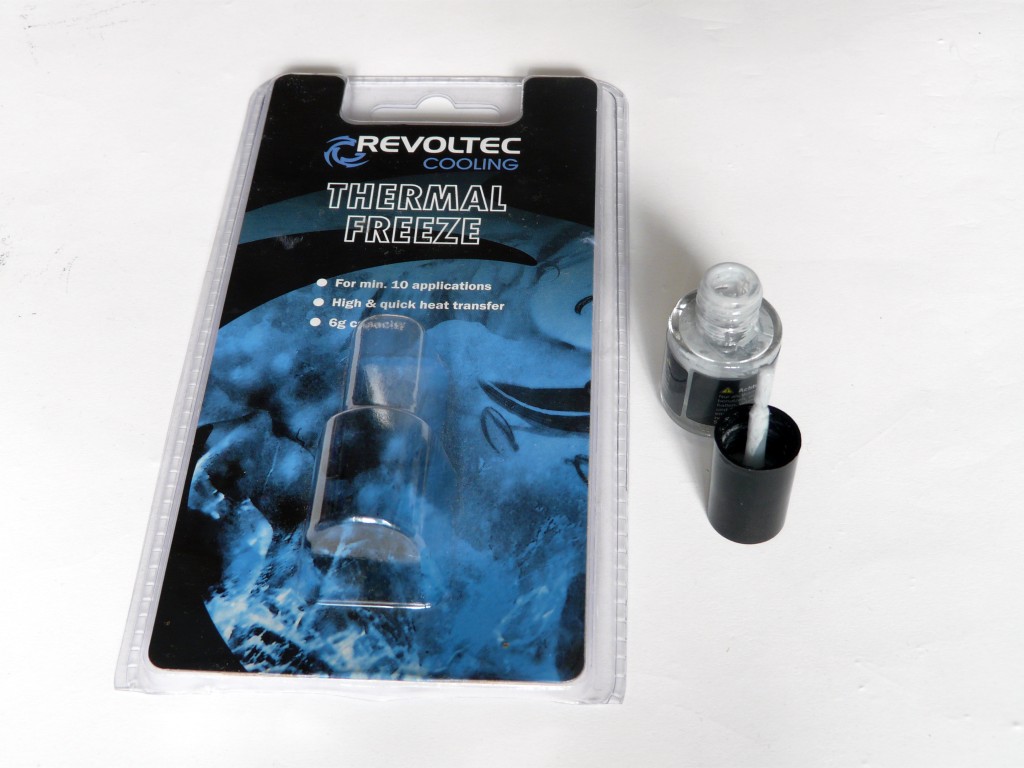
The compound is rather thin, but thanks to the small brush attached to the vial cap is easily deposited. It's used in very thin layer so the 6 gram will last long.
A drawback to this compound is not something else but the glass vial. Drop it from high enough and it will break.
Revoltec Thermal Freeze Diamond
Characteristics:
- Appearance – Gray
- Thermal Conductivity - >3.8 W/m °K
- Temperature range – -50°C ~240°C
- Specific Gravity - 2.4 gr.
- Capacity - 6 gr.
Contains:
- Silicone mixture: 50%
- Carbon mixture: 20%
- Metal-oxide mixture: 20%
- Diamond particles: 10%
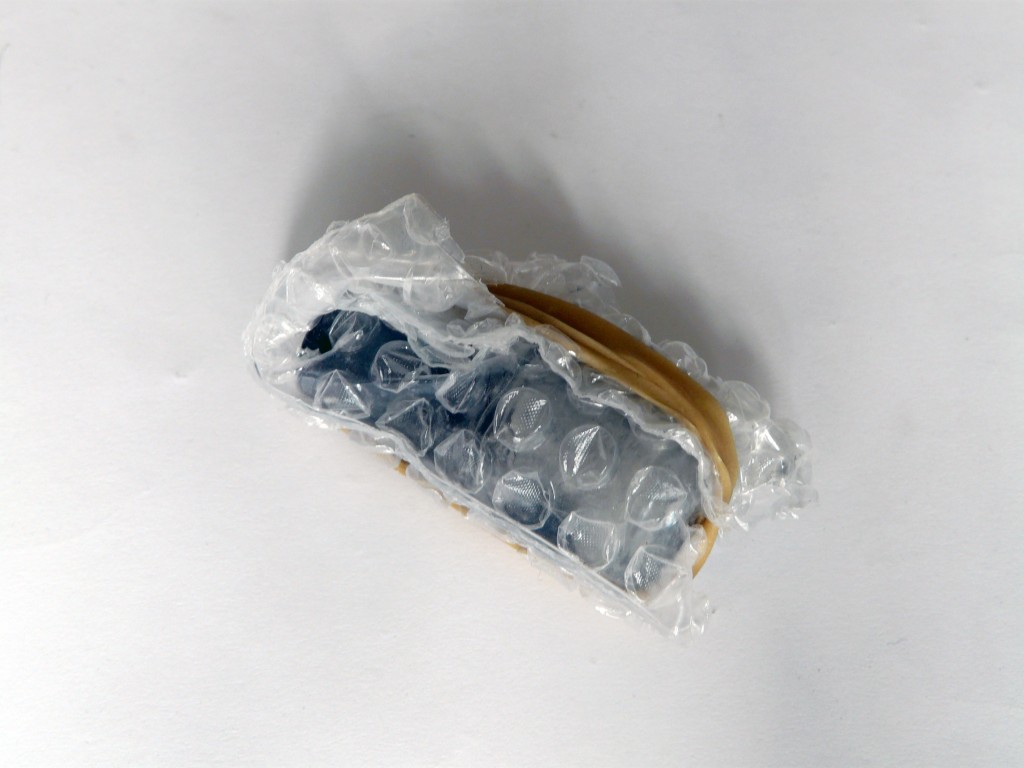
We had the pleasure of testing not only REVOLTEC THERMAL FREEZE, but also its "bigger brother" that happens to be still in development and will be officially available in 2009. The interesting about it that it contains diamond dust. According to REVOLTEC that's something revolutionary, but whether that's true or not only tests will tell. We happen to be the first Website that received this compound, even though we kind of delayed the review a bit. We don't even have a price for it. Revoltec assures us though that it will not compete with their best performing compounds, it will have very reasonable price.
You might wonder what's so special about diamond dust? A quick check shows that thermal conductivity of среброто is 429W/m °K, while that of diamonds is around 900-2320 W/m °K. That makes them at least twice as good. As for the price – let it bother you not, the diamond dust i s synthetic one, i.e. not expensive.
This compound uses the same type of glass vial as its predecessor, but got to our lab in mere bubble wrap pouch. Pictures are what they are because the couriers delivering it were apparently rather sloppy and the vial was broken.
Coolink Chillaramic

Characteristics:
- Appearance – White
- Temperature range – -45°C ~105°C
- Specific Gravity - 3.2 gr.
- Capacity - 10 gr.
The Coolinк Chillaramic thermal compound is probably the best one on the market. According to Coolink it contains nano-particles which make it so effective. It comes in rather colourful box. The compound itself is in big 10 gr syringe, and should according to Coolinк (again) be enough for about 30 uses.
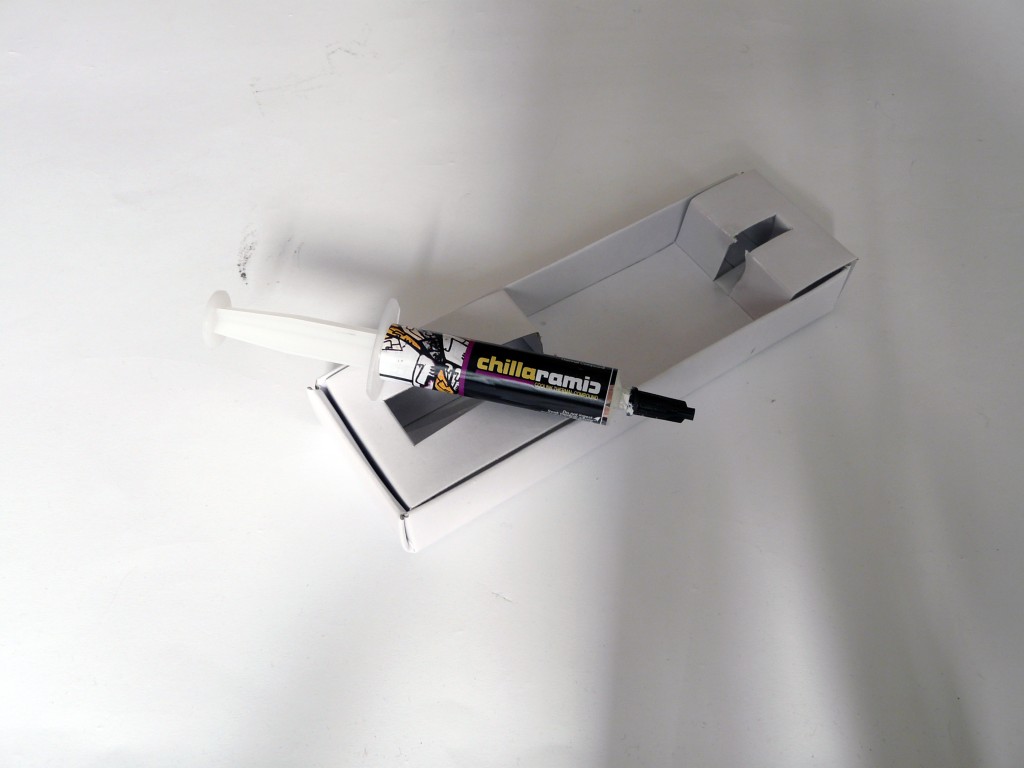
Chillaramic is wit average density and is applied and cleaned easily.
Noctua NT-H1

Characteristics:
- Appearance – Gray
- Temperature range – -50°C ~110°C
- Specific Gravity - 2.49 gr.
- Capacity - 1.4 ml.
NOCTUA NT-H1 is one of the best performing compounds in out tests. It comes in clear plastic casing that contains all the characteristics on the back along with detailed description for applying it.
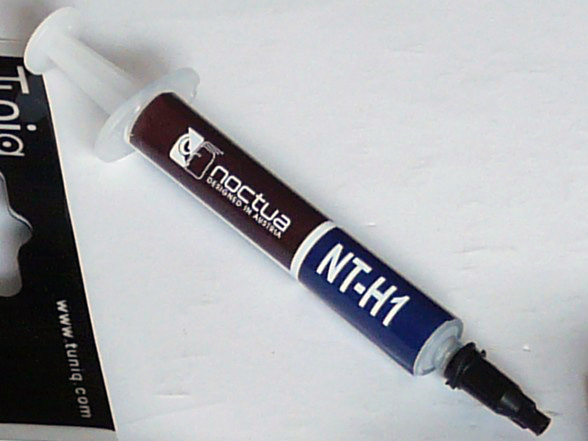
The compound itself is in plastic syringe with volume of 1.4ml. (using different measuring units is a tad underhanded of NOCTUA, since prevent us from making a direct comparison, still judging by the size of it we say it contains about 3.5 – 4 gr.), which should be enough for about 15 uses. The compound is quite thick and is applied with some effort compared to the above mentioned ones, it also is more difficult for removing. Using too much of this compound will not allow it to spread properly (due to its thickness) which will reduce its effectiveness.
Gelid GC1

Characteristics:
- Appearance – Gray
- Viscosity - 2850 Poise
- Specific Gravity - 3.96 гр.
- Capacity - 5 гр.
The GELID compound… It comes in clear plastic casing that contains lots of bragging about it and even come comparison charts between their GC1 and ArcticSilver5 and МХ2, (claiming at that that GC1 is superior)... How much of that is true we'll find later...
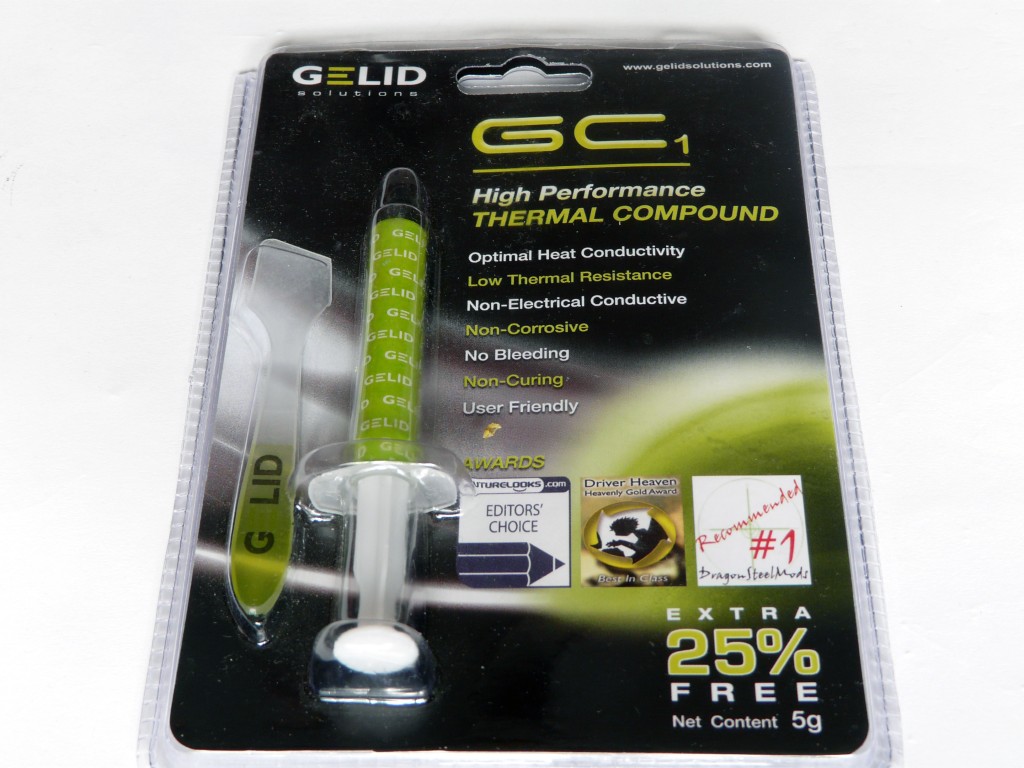
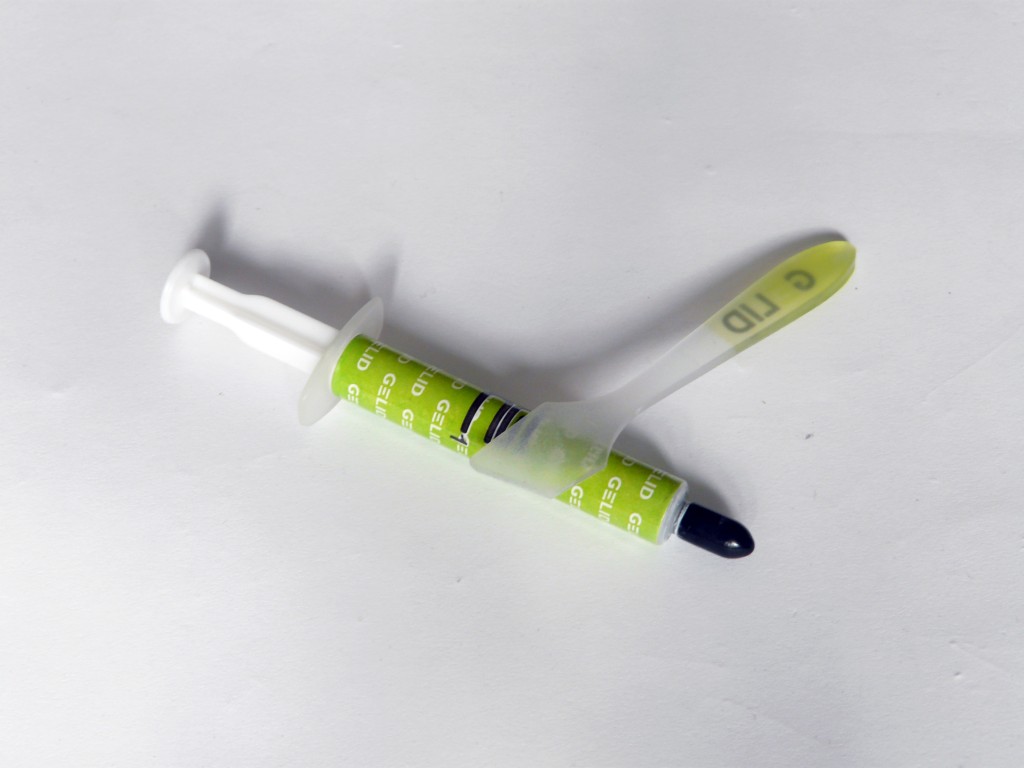
The compound itself is in green syringe that unlike other syringes has a rubber cap preventing the compound from drying
The compound is with average density and is applied easily.
The other thing that impresses about it is the provided plastic spatula that should make applying the compound more easy. During our tests though, we determined that it is nearly useless, in fact applying the compound with it is more difficult (nearly impossible even).